


✨ Why Good Skin Has Always Mattered
Let’s be honest… wanting good skin isn’t a “modern thing.”
It didn’t start with Instagram, Or TikTok, Or even that one friend who suddenly became a “skincare expert”overnight.
It’s human nature.
For as long as history has been recorded, we’ve always linked skin to health, wealth, confidence, and identity. And when you look back, it’s fascinating (and slightly terrifying) what people have done in the name of “good skin.”

👑 The Elizabethan Era: (1558–1603)
Elizabethan Makeup: Beauty or Poison?
We’ve all seen Queen Elizabeth I in those ghost‑white portraits and thought, “Wow… that’s the ultimate beauty look!”
But here’s the truth: it wasn’t a fashion statement. That heavy white makeup was actually a clever (and slightly deadly) camouflage.
Elizabeth had survived a near‑death bout of smallpox, which left her face scarred. With no foundation, no blur tools, and definitely no Instagram filters, her solution was a thick mask made of white lead and vinegar. It did the trick for appearances, but here’s the kicker: that “mask” probably slowly poisoned her over time, and many historians believe it was a factor in her eventual death.
In the late 1500s, during and because of Elizabeth, pale skin was seen as the ultimate sign of wealth and status. If you had a tan, it suggested you worked outdoors. If you were pale, it meant you lived a life of comfort. So naturally, people aimed for that flawless, porcelain complexion.
The problem? Many used white face preparations containing lead.
While it created the desired look, over time it caused:
Skin damage
Sensitivity
Premature ageing
Long-term health concerns.
But instead of stopping, people often applied more to cover the damage. A pattern we still see today—prioritising appearance over long-term skin health.…” 😄
So next time you think about covering up a little blemish, just remember—Elizabeth went all in… and paid the ultimate price.

The Georgian Glow-Up (1700s… sort of)
By the 1700s, beauty had gone full theatre. Heavy powders, bright rouge, and bold lips were all the rage. But here’s the twist: it wasn’t just about looking pretty — it was also about hiding imperfections and keeping up appearances… literally.
Common skincare ingredients included rose water, glycerin, and cucumber, which were used to moisturise and improve the complexion. This was the good part, think of it as the early version of “hydration and glow.”
But for those who went full “painted” — using white paints and enamels on their faces and arms — life became tricky. Any big smile or exaggerated expression risked cracking the paint, which is exactly why so many of them looked so serious in portraits. Basically, grin too much and you ended up with a cracked face! 😬 Kind of like a 1700s version of Botox — only instead of a quick needle, you had to freeze your face into a permanent serious expression for hours. Smile at your own risk.
And if that wasn’t enough, there were the black beauty dots glued strategically on the face. These weren’t just for cosmetic reasons— they covered blemishes, smallpox scars, or other marks, and sometimes were placed to send a cheeky little message. Near the mouth meant flirtation, near the eye could signal intrigue… a bit like sending a DM, but far more fashionable.

🌞 The 20th Century Shift: The Rise of the Tan (1923 onwards)
Fast forward to the early 20th century, and everything flipped.
Suddenly, having a tan became fashionable.
Legend has it that after Coco Chanel returned from holiday with sun-kissed skin, it became the new “look.”
Now a tan meant:
You had leisure time
You travelled
You weren’t stuck indoors working all day
And just like that… everyone wanted one. Funny how trends change, isn’t it?
A sun-kissed glow became associated with health, vitality, and wealth. Unlike the previous Victorian ideal of pale, delicate skin (associated with staying indoors and high social status), tanned skin suggested you were outdoors, active, and enjoying life, a sign of modernity and leisure.
Reality: Despite the healthy look, a tan is actually skin damage caused by UV radiation. Even mild sun exposure triggers the skin to produce melanin, which is protective but also a marker of DNA damage. There is no such thing as a safe tan, Tanning leads to premature aging and increased risk of skin cancer.
💋 Wartime Women (And Yes… Tea Bags and Coffee Granules)
Now this is one of my favourite bits.
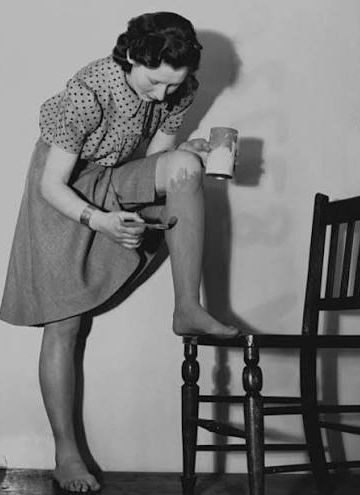
During the 1940s, life was anything but easy, life was challenging, but personal care remained important. Women continued to wear lipstick and take pride in their appearance—not out of vanity, but because it boosted morale and provided a sense of normality.
And when resources were limited, creativity took over:
Tea bags
Coffee granules
Hand-drawn seams on the legs.
(how- I mean… I can barely get my fake tan even on my ankles, and they were out here mixing up a brew for their legs 😄
All used to replicate the look of stockings. It might sound amusing now, but it highlights something powerful: looking good has always helped people feel stronger and more confident—even in difficult times.
💡 Why our grandmas look so good:
This era was actually one of the least harmful for skin. There were no tanning beds, minimal sun obsession, and few harsh chemicals in makeup.
Most women ate simple, wholesome food straight from the ground—lots of vegetables, fruit, and whole grains—which nourished the skin naturally.
💉 Fast Forward to Now… (Here’s Where I Get a Bit Honest)
Now here’s where we switch from funny history to real talk (but still warm and honest). Today we have skincare science, clinical treatments, and injectables like Botox and fillers — and that’s amazing. They’re brilliant tools when used correctly, especially when addressing specific lines or volume loss.
But here’s the important bit:
Botox and fillers don’t give you healthy skin. They can relax muscles or add volume, but they don’t improve your skin’s actual quality — its elasticity, strength, barrier function, or resilience.
In fact, overuse (especially when started too early or used without a proper skin health plan) can contribute to:
Stretching & weakening of elastin fibres
Changes in natural skin support
Skin becoming reliant on being “filled” rather than supported
Fillers and Botox do not give you good skin.
So while fillers have their place — they work best when the skin already has good health first and you’re restoring what has been lost, not using them as a stand‑in for healthy skin.
So take a moment and pause before chasing the latest look…It’s easy to focus on the surface, but what’s happening underneath matters just as much.
🌿 The Difference Today
The biggest shift? We don’t just care about our skin… we actually listen to it (crazy, right?).
Today, we understand the science. We protect the skin barrier. We work with the skin—not against it.
And that’s what I love about what we do in clinic. It’s not about chasing perfection. It’s about helping you feel like you again—just healthier, stronger, and more confident in your own skin.
💬 Final Thought
From queens to wartime women…From lead makeup to modern treatments…
One thing has never changed:
When your skin feels good, you feel good.
And that confidence? That’s timeless.
💬 Loved This Blog?
If you enjoyed this little trip through skin history (and maybe had a giggle along the way), let me know!
Just tap the ❤️ and leave a comment below—I love hearing your thoughts, and it helps others find the blog too.
Who knows… your comment might just inspire the next one! ✨


Comments